AI in Music Production for Independent Artists: A Balanced Guide
Discover how to integrate AI into your workflow as a creative partner while maintaining your unique artistic voice and integrity.
The New Creative Partner
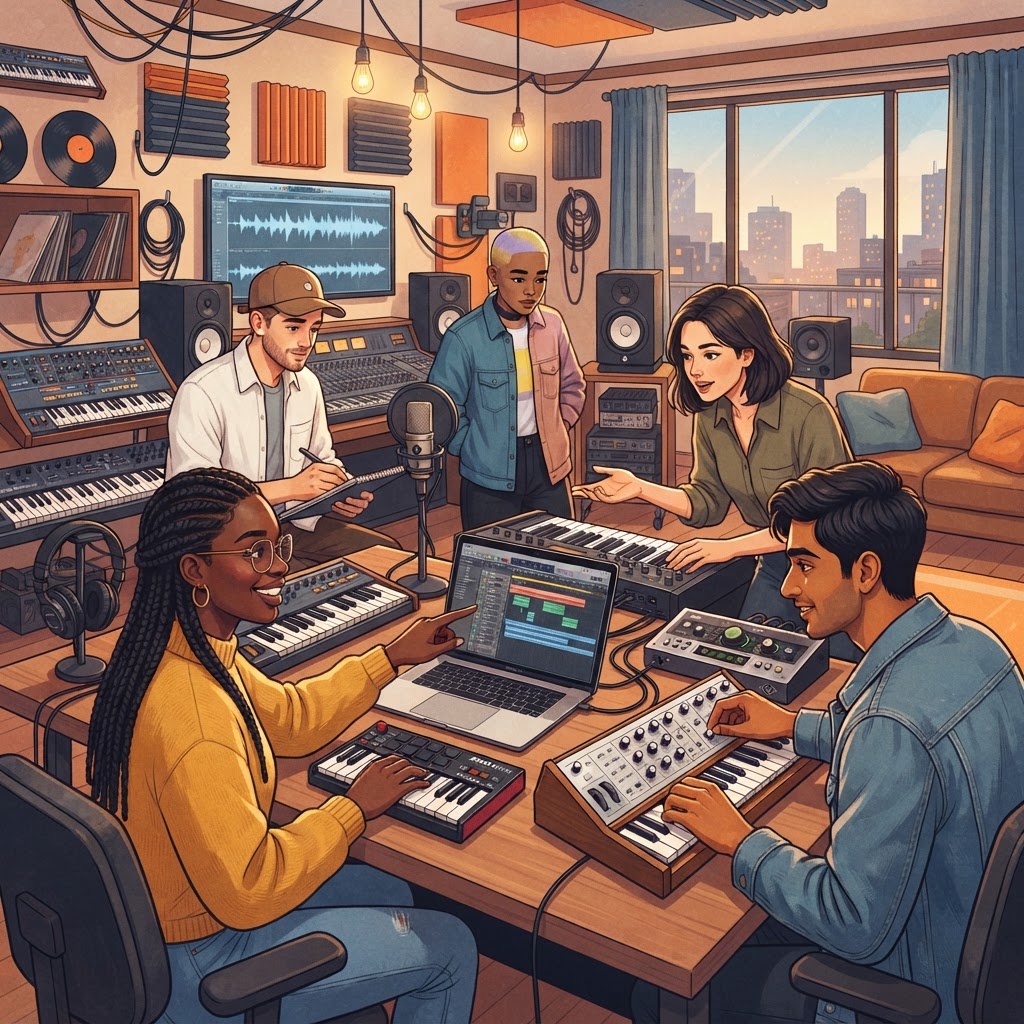
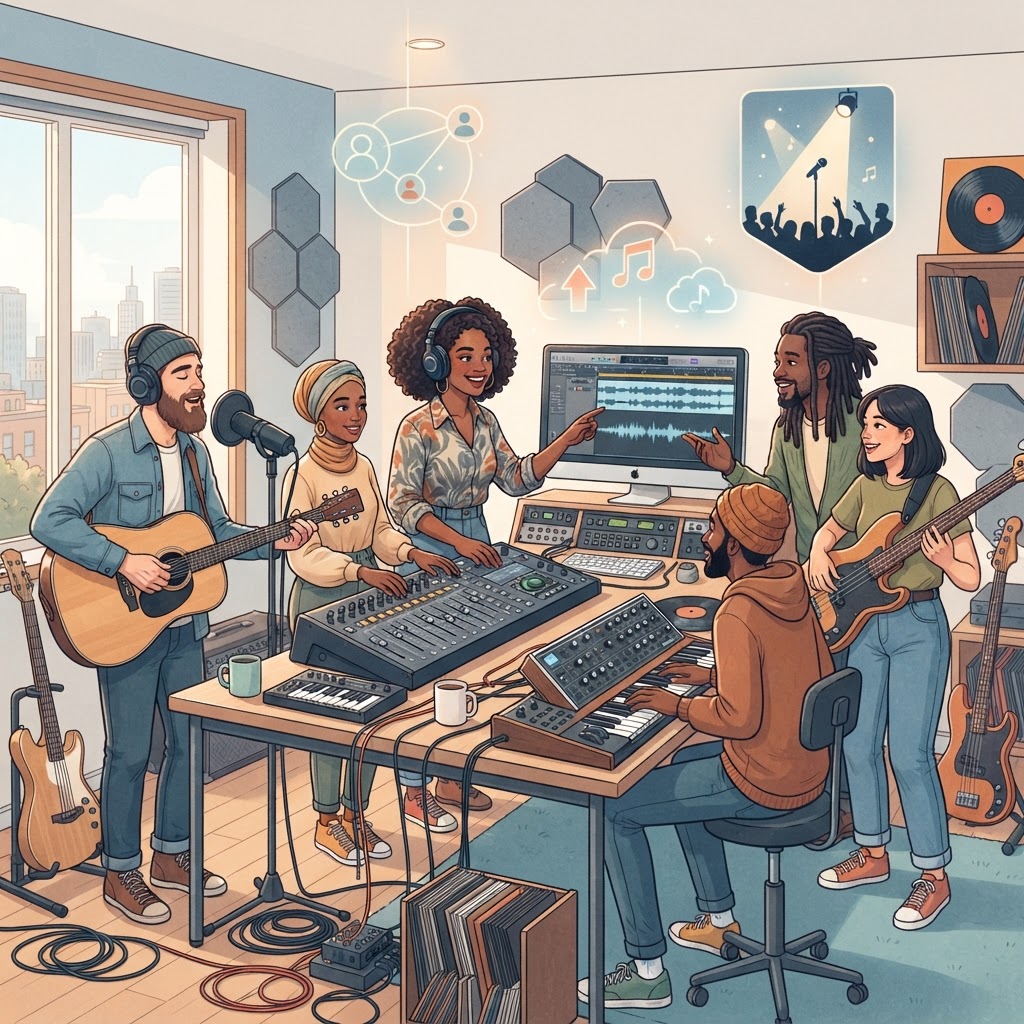
For independent artists, the rapid rise of AI in music production for independent artists has sparked intense debate. While some fear the automation of creativity, others see a powerful evolution in how we record, mix, and master. The reality for the modern producer is that AI is best viewed not as a replacement for human artistry, but as a versatile co-pilot that can handle technical heavy lifting, allowing you to focus on the emotional core of your music. Research indicates that while many creators express unease regarding ethics and copyright, there is a significant appreciation for the potential of these tools to make individual musicians more independent and productive.
The integration of these technologies is not about removing the human element but about augmenting the capabilities of the individual creator. By delegating repetitive or highly technical tasks to software, artists can reclaim time for the aspects of production that require genuine human intuition and emotional depth. This shift is particularly relevant for independent musicians who often manage every stage of the production process themselves, from initial composition to final distribution.
Assistive AI vs. Generative AI
It is helpful to distinguish between two primary categories of technology. Generative AI creates content from scratch, often based on text prompts, which can lead to generic results. In contrast, assistive AI is designed to augment your existing workflow. These tools help with administrative tasks, sound discovery, and technical mixing, keeping you firmly in the driver's seat of your creative vision. By integrating these systems into your DAW, you can maintain full control over your artistic intent while delegating repetitive tasks. A majority of music creators see the eventual role of AI in music production as primarily a supportive one, where human producers retain firm control of the creative reins.
Streamlining Your Workflow
Independent producers often face the challenge of balancing high-quality output with limited budgets. Assistive tools can bridge this gap. For instance, AI-powered mixing assistants can help you achieve a balanced mix by analysing your multitrack project and suggesting EQ or compression settings. This provides a solid technical foundation, ensuring your tracks can stand up sonically against major label releases without requiring a high-end studio budget. These tools are increasingly popular, with recent industry data indicating that 32% of artists using AI rely on it specifically to mix or master their work.
Beyond mixing, AI can assist in the arrangement phase by suggesting harmonic progressions or drum patterns. This modular approach allows you to use AI as a sounding board for ideas, which you then manually edit, layer, and arrange to fit your specific artistic goals. By treating AI as an iterative tool, you can generate multiple options for comparison, which helps in refining your sound without losing your unique creative signature.
Essential Tools for Your Toolkit
While AI is changing the landscape, traditional music production tools remain vital. You can build a professional-grade setup using high-quality free resources. Consider exploring the Loca-Nation Product Vault for curated recommendations. For specific tasks, tools like TDR Nova offer precise dynamic equalisation, while Valhalla Supermassive provides expansive atmospheric effects. Combining these with AI-assisted automation allows you to maintain creative control while accelerating your production speed. When selecting software, start with one tool to avoid overwhelming your existing process. Remember that the best approach is to use AI to support the parts of your workflow that slow you down, rather than replacing the parts that define your unique sound.
Maintaining Artistic Integrity
The most common concern is that AI will homogenise music. However, technology is only as good as the human behind it. AI tools often produce drafts that require significant human intervention to become finished, emotionally resonant pieces of art. Your unique taste, storytelling, and gut feeling are what make your music authentic. Use AI to spark ideas or solve technical problems, but never let it dictate the final creative direction of your work. Remember that AI suggestions will not always align with your artistic vision, so critical evaluation remains essential. If a mix is muddy or thin, an automated tool will not fix the underlying issues; you must rely on your own ears and judgement.
Best Practices for Independent Producers
- Stay Informed: Keep track of the tools you use. Understanding how a plugin or AI assistant processes your audio helps you learn and grow as a producer.
- Focus on Fundamentals: AI cannot replace a strong musical foundation. Continue to hone your songwriting, arrangement, and performance skills.
- Be Transparent: While you rarely need to credit AI in your metadata, it is good practice to understand the policies of your distribution platform.
- Prioritise Quality Control: Always review AI-generated masters or mix suggestions. If a mix is muddy or thin, an automated tool will not fix the underlying issues.
- Start Small: Identify specific areas where production slows you down and test one tool at a time to see if it fits your workflow.
Taking the Next Step
Once your track is polished and ready, the journey from the studio to the listener begins. Whether you are looking to refine your sound or prepare for your next release, remember that technology is a tool to serve your vision, not the other way around. For those ready to share their music with the world, you can upload a release to our platform to reach a wider audience. For more insights on navigating the industry, check out our guide on how unsigned artists get radio airplay in the UK.
Sources
- Musicians’ ethical concerns about AI: an interview study
- AI & Music Tech In 2026
- Assistive AI in Music Production | Tools for Independent Artists
- How Artists Are Using AI to Make Music: Findings from Analyzing Hundreds of Musical Works
- AI Tools Independent Musicians Are Actually Using in 2026
- Can AI be a creative partner in the studio?
Hear what is moving this week
The Loca-Nation charts rank unsigned artists by real listener activity, not follower counts.
Open the charts