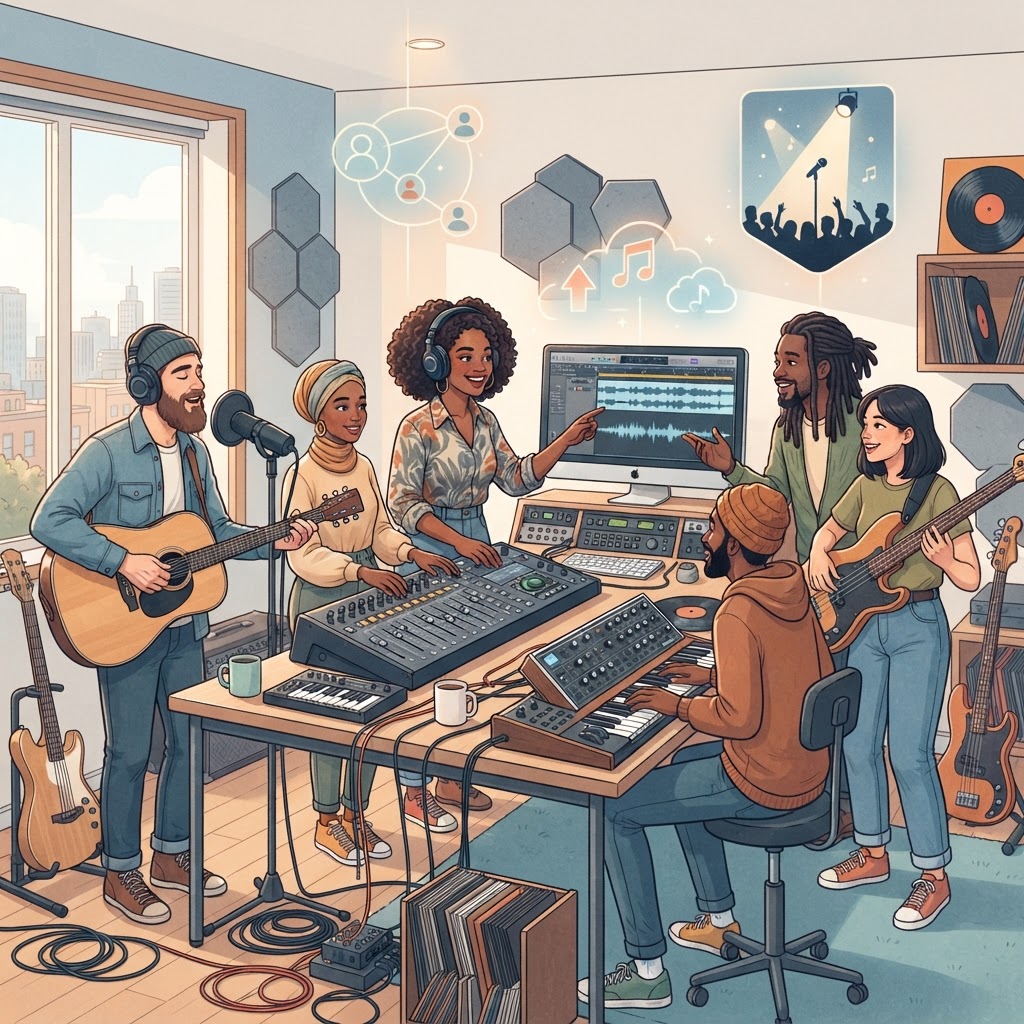
Music Student Guide to Industry Networking: Building Your Career
Transitioning from student to professional requires more than talent. Learn how to build authentic industry connections while still in education.

The Student Advantage: Why Networking Starts Now
For many music students, the transition from the classroom to the professional world feels like a daunting leap. However, your time in education is not just about honing your craft; it is the most fertile period for building your professional network. Unlike established artists who may be guarded, students often have the unique advantage of being part of a collaborative community where peers are eager to grow together. Networking is a core skill that needs to be honed, and students should step outside the student bubble early to forge relationships that can last throughout their careers.
Networking is not about collecting business cards or chasing fame. It is a two-way street where you should focus on meeting people you can assist and support. By building genuine connections, you create a foundation where opportunities arise through personal recommendations and word-of-mouth.
Define Your Intentions and Strategy
Before you reach out to anyone, you must have a clear strategy. Networking without a goal often leads to generic outreach that fails to resonate. Decide what you need for your next release cycle, whether that is production feedback, management conversations, or playlist support. When you know exactly what you are looking for, your outreach becomes focused and professional. Effective outreach requires role clarity and should be built by function rather than fame.
Consider your specific goals: are you looking for a studio to work in, a label to partner with, or a collaborator to write with? By aligning your networking efforts with these concrete objectives, you avoid the trap of forced interactions. Maintain a spreadsheet of contacts, including both peers you meet organically and aspirational figures you hope to connect with in the future.
Leverage Your Existing Circle and Education
You do not need to start from scratch. Your fellow students, tutors, and local music communities are your first tier of contacts. These relationships are often the most durable because they are built on shared experiences. Practical music education environments are networking opportunities in disguise. Your instructors are industry contacts who have seen your work and know your capabilities, and your classmates are your first professional network, growing their careers alongside yours.
If you are looking for ways to refine your sound or find new tools, explore resources like the Product Vault to discover high-quality, free plugins that can help you achieve professional-grade results, such as the TDR Nova for precise tone control or Valhalla Supermassive for expansive, cinematic spaces.
Digital Networking: Beyond the DM
Social media is a powerful tool, but it requires a nuanced approach. Instead of cold-messaging industry professionals with thin requests, focus on building digital relationships. Engage with the content of artists and professionals you admire, join relevant music groups, and share your own creative journey. When you do reach out, ensure your message is personalised, contains a meaningful proof point—such as a specific listener behaviour or a unique project milestone—and includes a clear, singular ask.
Your online presence should be consistent and professional. Ensure your profiles reflect your skills and creative portfolio. When you network online, provide clear links back to your website or portfolio so that people can discover more about you and contact you easily.
Attend Events and Workshops
While online connections are vital, in-person interaction remains a cornerstone of the industry. Attend local gigs, music conferences, and workshops. These environments allow you to meet booking agents, promoters, and other producers in a natural setting. If you are unsure where to start, look for local meet-up groups or regional committees within organisations like the Musicians' Union. Remember that networking is often about word-of-mouth; being a reliable, talented, and approachable person is the best way to ensure your name is recommended when opportunities arise.
When attending events, be bold but courteous. Avoid approaching clearly enclosed groups and focus on being genuinely interested in the people you meet. Ask thoughtful questions rather than just selling your own services. Networking is a two-way street, and small acts of kindness or follow-up messages after an event can lead to lasting professional friendships.
The Importance of Resilience and Professionalism
Building a career in music is a marathon, not a sprint. You will face rejection, and not every connection will lead to an immediate opportunity. Cultivating resilience is essential. Use your time as a student to learn how to handle feedback, refine your communication skills, and stay consistent. Whether you are preparing to upload a release or seeking your first professional collaboration, remember that every interaction is a chance to learn and grow. Networking is an essential skill for working in the music industry, and maintaining a positive, persistent attitude is key to long-term success.
Professionalism also extends to how you present yourself. Always be prepared with a brief, 30-second introduction that covers your genre, your current projects, and your goals. This elevator pitch helps you communicate your value quickly and clearly when meeting new people. Furthermore, consider joining professional organisations like the Audio Engineering Society or GRAMMY U, which provide structured environments for students to meet established professionals and gain industry insights.
Practical Steps for Success
- Build lists by function: Organise your contacts based on their role, such as curators, managers, or collaborators.
- Be authentic: Do not target people solely based on their follower count. Focus on genuine fit and shared creative values.
- Support others: Networking is reciprocal. Engage with the work of your peers and offer support before asking for favours.
- Keep learning: Stay updated with industry news and continue to develop your technical skills, as these are the assets that make you a valuable collaborator.
- Follow up: Always take the time to send a brief, polite follow-up message after meeting someone new to solidify the connection.
- Maintain a professional brand: Ensure your social media profiles and portfolio are up to date and clearly reflect your creative identity.
Sources
Hear what is moving this week
The Loca-Nation charts rank unsigned artists by real listener activity, not follower counts.
Open the charts